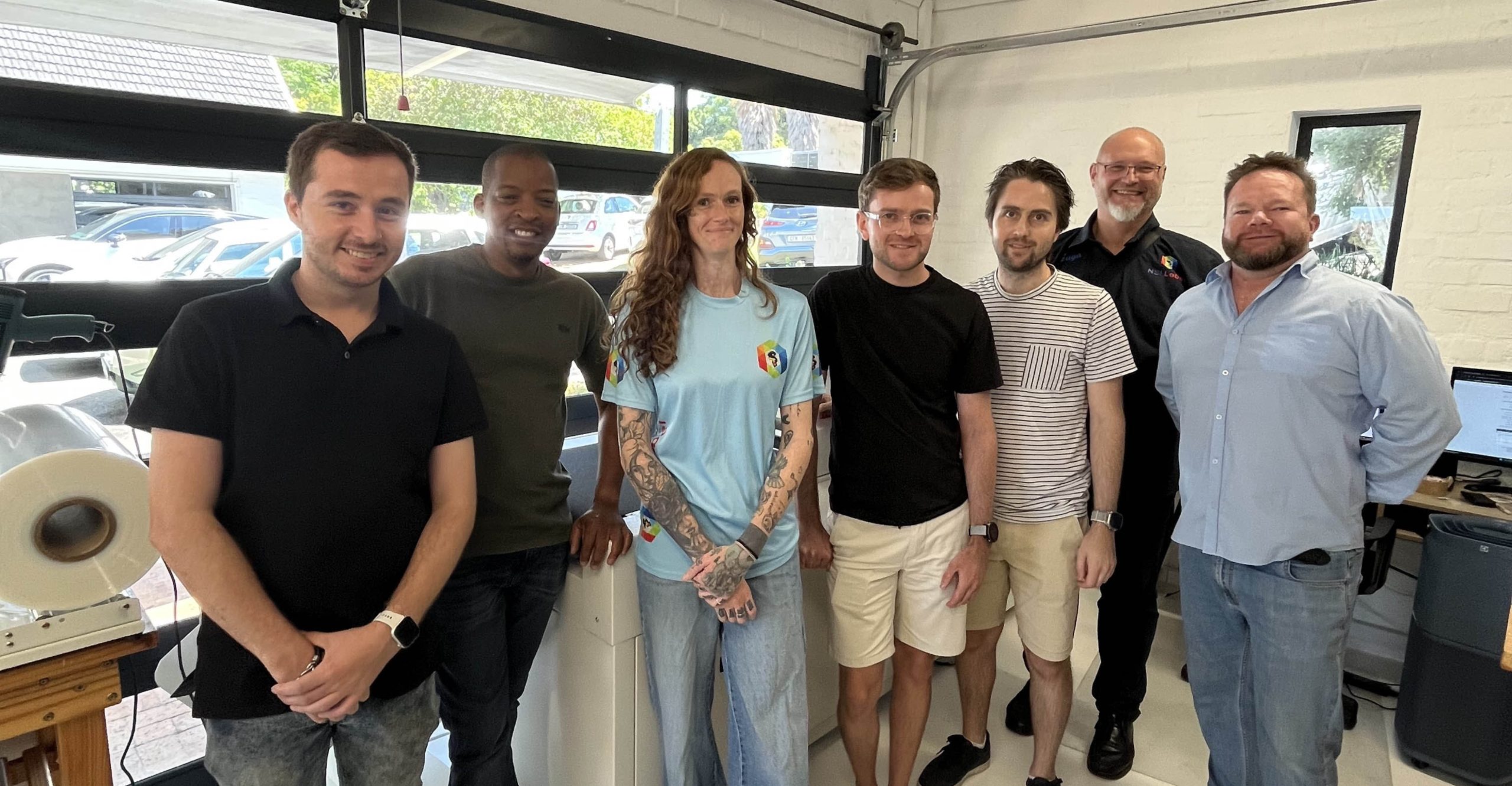
Packaging buyers are demanding shorter runs, faster turnaround and greater personalisation, making finishing a critical stage of modern print. At Pleekō Print Studio, that reality has prompted a decisive shift: bringing advanced digital die cutting in-house to unlock new applications, tighter timelines and more profitable work.
The Somerset West-based operation recently installed a Saga SG-ASF420, supplied by NSI Label – reflecting a broader trend across the packaging and print sector. The focus has shifted from deciding whether digital finishing makes sense to how intelligently it can be integrated into a business built on speed, flexibility and creativity.
According to NSI Label’s general manager, Shawn Bezuidenhout, the SG-ASF420 sits in a sweet spot between capability and practicality. ‘The differences between this model and larger flatbeds are mainly table size, feeding capacity and tool configuration,’ he explains. ‘But for most digital printers, micro-converters and short-run specialists, this machine delivers everything they need without the cost, footprint or complexity of a large-format system.’
While bigger Saga models can handle thicker substrates such as board at higher volumes and incorporate additional cutting angles, the SG-ASF420 is engineered for work that is increasingly common: labels, folding cartons, packaging components, point of sale and bespoke promotional pieces. ‘You have to match the machine to the operating environment. Buying more than you need doesn’t automatically create value,’ says Shawn.
Ease of use was central to the Saga SG-ASF420’s design philosophy. ‘Our focus is empowerment, not disruption,’ says Shawn. ‘We’re not trying to change how printers think. We want to expand their offering without overcomplicating the workflow.’
That approach resonated strongly with Pleekō’s owners, Eben and Johan Viviers. For them, the investment was about removing friction, not simply adding more hardware. ‘At the end of the day, the machine has to help us deliver what the customer wants, faster and with fewer delays,’ they explain. ‘If it slows you down or adds unnecessary steps, it defeats the purpose.’
The SG-ASF420 integrates automatic sheet feeding, scanning, creasing and cutting in a single platform. With four tool positions operating in multiple combinations, it can cut, crease and perforate in one pass – eliminating multiple setups and outsourced finishing. Its downforce of up to 1 900g enables it to handle a wide range of substrates, from corrugated board and coated paper to kraft, PVC and PET, while accommodating material stacks up to 18cm high.
Our focus is empowerment, not disruption. We’re not trying to change how printers think. We want to expand their offering without overcomplicating the workflow.”
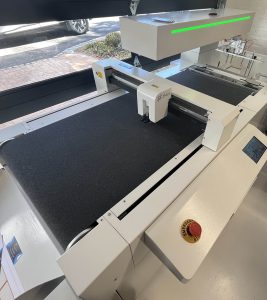
In addition, faster scanning and running speeds, rear scanning and rear cutting without interference and an intelligent 7-inch touchscreen interface translate into a clear benefit on the shop floor: time saved.
The timing of the investment was key for Pleekō. ‘Customers don’t want to hold printed stock anymore. They’d rather order 500 today, change the design tomorrow, personalise it per region or campaign – and do it again next month,’ Eben notes.
Traditionally, this kind of agility was impossible. Steel dies, long lead times and minimum order volumes made short-run packaging expensive and slow. Digital die cutting changes the equation entirely. The SG-ASF420 can store up to 1 000 templates, allowing multiple short-run jobs to be processed in a single unattended run. Mixed jobs go in and finished components come out.
‘That’s where the ROI really lives,’ says Shawn. ‘Not in headline speed figures, but in reduced setup, less waste and the ability to say yes to work that used to be uneconomical.’
Johan adds: ‘We can turn jobs around faster, keep everything under one roof and offer packaging that feels more premium and personal.’
This experience extends to after-sales support. NSI Label’s technicians provide rapid response and remote assistance, with minimal downtime reported. ‘Installation and support were excellent,’ the Viviers brothers confirm. ‘The team knew the machine inside out, and we were up and running within a single day.’