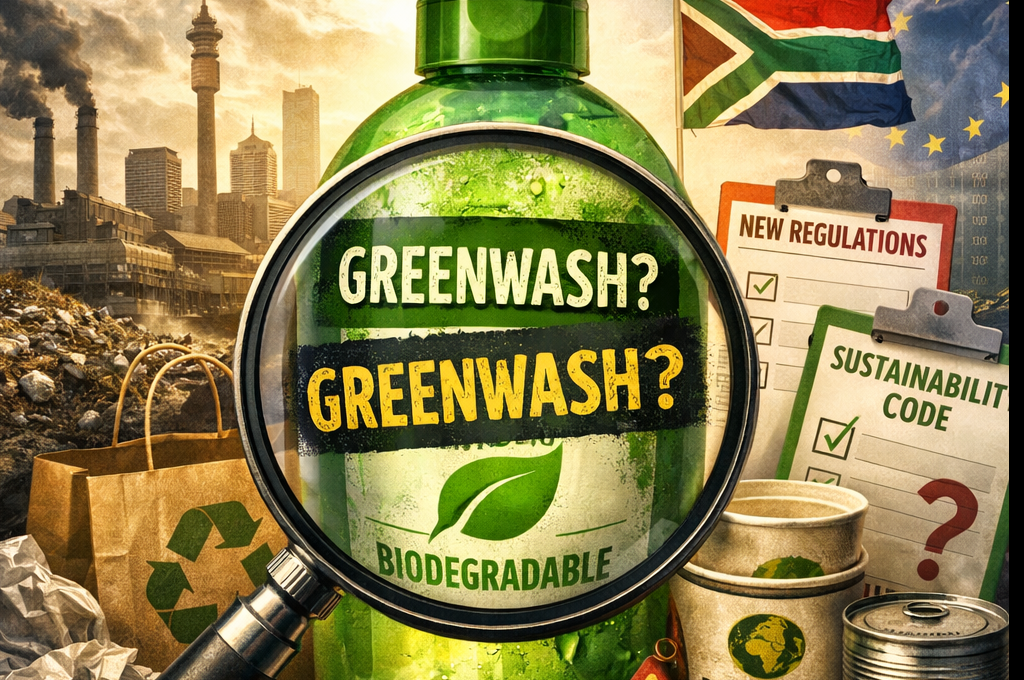
‘Eco-friendly’ has become a persuasive shorthand. It reassures consumers, signals corporate responsibility and differentiates brands in crowded retail spaces.
Yet behind the green icons and carefully chosen words lies a far more complex equation, one that depends on verification, infrastructure and measurable outcomes. For South African producers, brand owners, converters and Producer Responsibility Organisations (PROs), that equation is under intense scrutiny.
The sector is entering a phase where unsubstantiated claims are no longer dismissed as marketing exuberance but treated as regulatory, financial and reputational risk. Locally, the Advertising Regulatory Board (ARB) is developing a Sustainability Code to curb vague or misleading environmental assertions. The South African Bureau of Standards (SABS) has published SANS 1728, setting clear testing and certification requirements for degradable, biodegradable and compostable claims. Globally, the European Union’s Packaging and Packaging Waste Regulation (PPWR) requires life cycle data, minimum recycled content and proof-based claims for market access.
For South African businesses in export-oriented value chains, greenwashing now carries commercial consequences.
From claim to capacity
In plastic packaging, claims like ‘recyclable’ or ‘biodegradable’ often collide with local waste system realities. According to Telly Chauke, CEO of Petco, verification starts with what happens once packaging leaves consumers’ hands.
‘Environmental claims like “recyclable” are verified through our partnerships with recyclers that process Petco-identified products,’ Telly explains. ‘Our recycling partners provide practical confirmation of which packaging formats and materials are accepted, processed and recycled at scale within the local system – and which are not.’
Although a polymer may be technically recyclable, if it is not collected, sorted and processed within South Africa’s infrastructure, claiming it as recyclable risks misleading consumers.
The challenge is greater for degradable and biodegradable plastics. Despite the publication of SANS 1728, there is currently no widely used SABS certification for plastic packaging carrying such claims. According to Boipelo Madonsela, recycling value chain analyst, this gap elevates the risk of greenwashing. ‘Without proper certification and verification against recognised standards, degradable or biodegradable claims remain vulnerable to being used as marketing devices rather than scientifically supported statements.’
Fibre clarity, with caveats
The global Two Sides Trend Tracker survey shows that consumers value paper packaging for its recyclability, biodegradability, compostability, lower environmental impact, affordability, safety and ability to display clear product information.
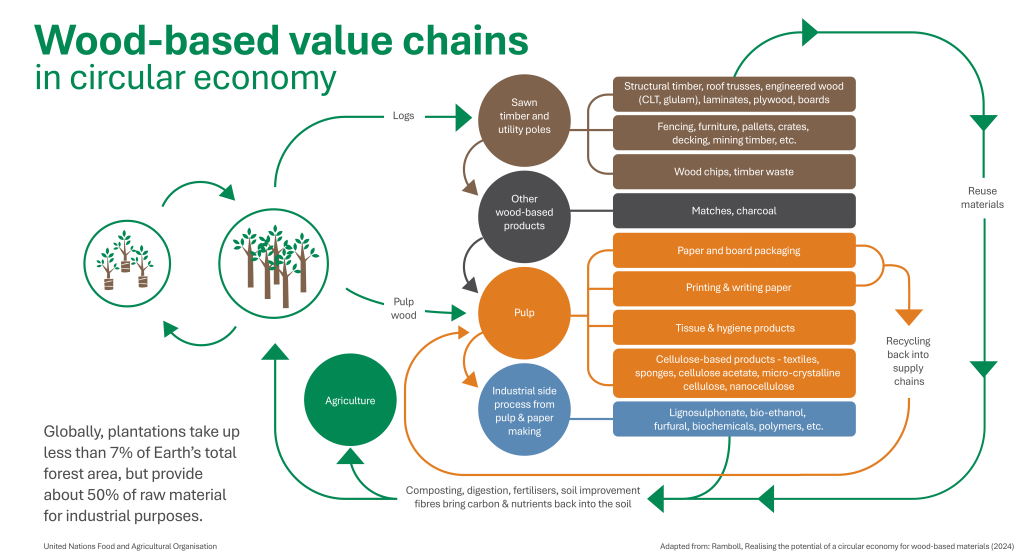
Yet misconceptions persist. A common one is that paper products should use only recycled fibre. ‘The sole use of recycled paper in manufacturing is not possible,’ says Samantha Choles of the Paper Manufacturers Association of South Africa (PAMSA). ‘Fibres can be recycled around seven times, each cycle shortening and weakening them. Without new wood fibre from sustainably managed trees, the paper cycle cannot continue.’
Forest certification schemes such as FSC® and PEFC provide traceability and credibility. Samantha adds that certification ensures brands can confidently state their paper packaging is responsibly sourced, maintaining trust across the supply chain.
Metals: evidence over assertion
Metal packaging faces high verification standards. Kishan Singh, CEO of MetPac-SA, explains: ‘We start with material reality, not marketing.’ Steel and aluminium are recyclable, but whether a specific format is recycled depends on contamination levels, collection pathways and integration into scrap value chains.
MetPac-SA assesses claims through site visits, data analysis and engagement with scrap yards, buy-back centres and processors. Recycled content claims require documented chain of custody or supplier declarations, particularly when communicated directly to consumers. Kishan supports stronger, more consistent verification, especially where claims influence purchasing decisions or regulatory treatment.
‘We do not endorse degradable or biodegradable claims on plastics – that sits with plastics PROs and the relevant standards,’ he says. ‘But inconsistent claims in any material stream undermine trust across the entire packaging sector.’
Designing out greenwash
Innovation in paper-based and corrugated packaging is accelerating, driven by both sustainability expectations and regulatory pressure. Jandri de la Rey, programme and strategy enablement manager at Fibre Circle, highlights a shift to mono-material fibre solutions. ‘We are seeing the removal of non-fibre elements such as polystyrene inserts by redesigning packaging so it can be recycled in a single stream,’ he says.
Lightweighting, water-based coatings and reducing laminate layers help paper packaging perform better while remaining recyclable. Fibre Circle works closely with recyclers before approving new products or claims. ‘Local relevance is critical,’ Jandri emphasises. ‘We caution against adopting international claims that don’t align with South African systems.’
This design compatibility is central to avoiding greenwashing. Claims that race ahead of infrastructure may satisfy marketing teams, but falter under regulatory and operational scrutiny.
The system behind the slogan
Across all materials, South Africa’s waste and recycling infrastructure remains the decisive factor. Telly notes: ‘While circularity is achievable in certain material streams, the country lacks the nationally integrated infrastructure and enabling conditions needed to scale a true circular economy model,’ she says.
Where industry-led value chains are established – notably PET beverage bottles and paper packaging – circularity works if collection, sorting, processing and end markets align. Elsewhere, progress is constrained by low public awareness, inadequate infrastructure and the limited integration of the informal waste picker sector. The absence of enforced separation at source legislation and consistent municipal implementation remains a critical bottleneck.
Metals benefit from intrinsic material value, supporting strong informal collection networks, but traceability and geographic coverage are uneven. For fibre and plastics, infrastructure gaps widen the space between claims and truth.
Regulatory momentum is building. Telly notes that PROs must help members move beyond reactive compliance. ‘Our role is to communicate upcoming legislative changes proactively – including timelines, risks and member obligations – so compliance becomes proactive rather than defensive,’ she says.
The ARB’s Sustainability Code and international frameworks like the EU’s PPWR converge on a single principle: if a claim influences consumer behaviour or regulatory treatment, it must be substantiated. Recycled content thresholds, life cycle assessments and auditable data trails are becoming standard.
For South African exporters, unverified claims can trigger trade barriers, while verified, credible sustainability performance can be a competitive advantage.
Inconsistent claims in any material stream undermine trust across the entire packaging sector.”
Industry voices agree that third-party verification is essential. Telly believes transparent, independent certification is key to restoring credibility. ‘Voluntary certification has value, especially for innovation and early adopters,’ she says. ‘But mandatory certification is imperative to create a level playing field. It must be well governed to ensure accountability and enforcement.’
Importantly, Telly argues that voluntary and mandatory schemes must be aligned. Without harmonisation, the risk is fragmentation and renewed confusion for both industry and consumers.
PAMSA’s reliance on FSC and PEFC certification, MetPac-SA’s ISO-aligned systems and Fibre Circle’s recycler-led approvals reveal that sustainability claims are only as strong as the systems that verify them.
The price of pretence
Getting it wrong is costly. Misleading claims invite regulatory sanction, erode consumer trust and can close doors to export markets. Greenwashing also damages the credibility of genuinely sustainable innovations, slowing circular economy progress.
South Africa’s packaging industry now stands at a crossroads. It can continue to trade in aspirational language, hoping scrutiny remains superficial, or it can invest in verification, infrastructure and transparency to align claims with demonstrable outcomes.